




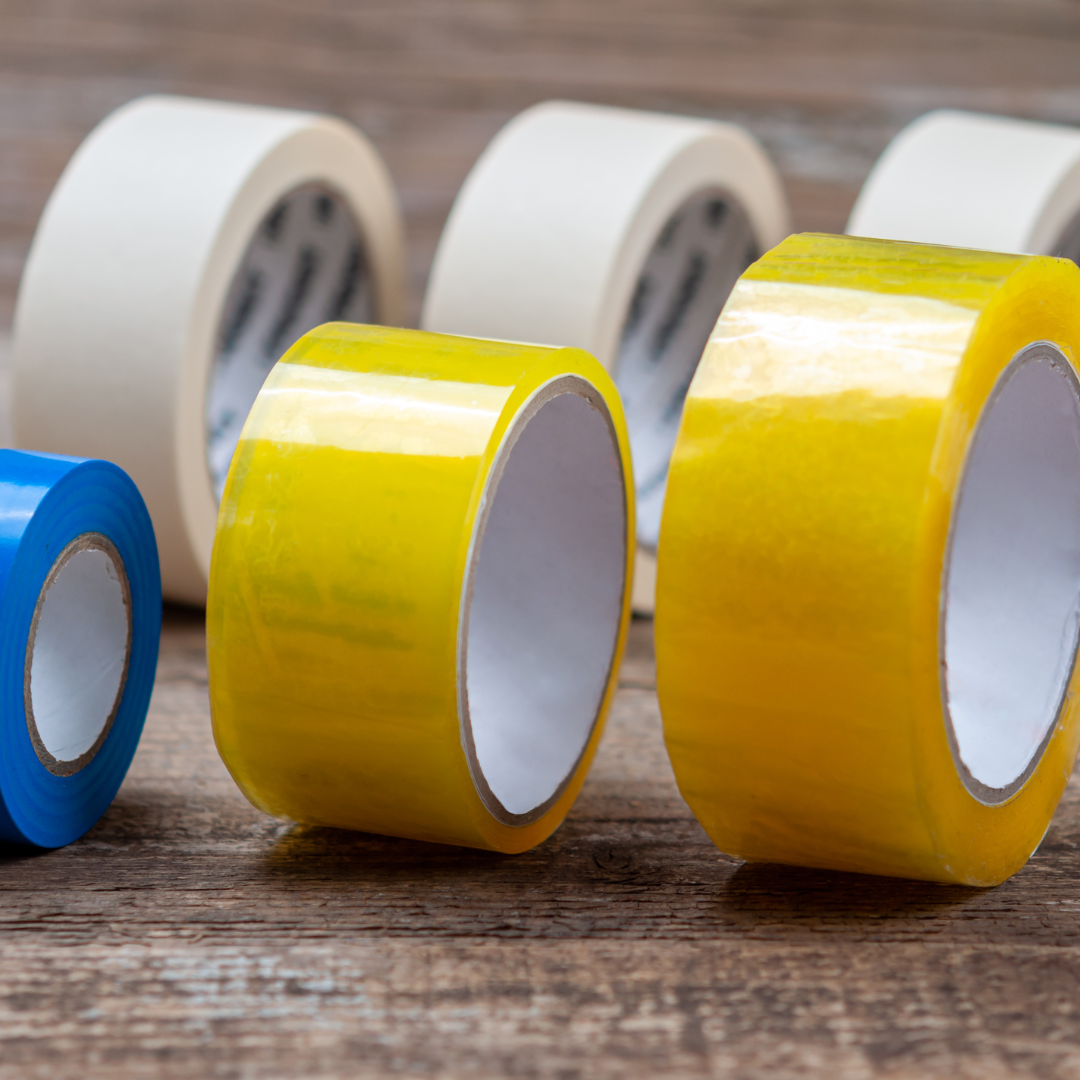
Water activated tape (WAT), also called gummed paper tape, is a kraft paper tape with a dry starch adhesive that only becomes sticky when it is wet. It has quietly become the default carton seal for recyclable e-commerce packaging in Australia. If you are weighing it up, these eight points cover what actually matters: how it works, how strong it really is, whether it is recyclable and biodegradable, how it compares with the plastic tape on a hand gun, and where it is the wrong choice.
For the full picture see our water activated tape guide; to pick a grade, reinforced vs non-reinforced; to apply it well, how to use water activated tape.
1. How water activated tape works: it bonds into the box, not onto it
The adhesive is a water-soluble starch, usually from corn, potato or wheat. Dry, it does nothing. A dispenser wets a measured strip; the starch hydrates, turns tacky for about 5 to 7 seconds, and as it dries it pulls into the top fibre layer of the corrugated board. The paper of the tape and the paper of the box effectively knit together.
Plastic (pressure-sensitive) tape works differently: it sticks to the outer paper liner under finger pressure and sits on the surface. That single difference, bonding into the board versus sticking onto it, is behind almost every other point on this list.
2. It is genuinely stronger, and the difference is large
In an independent evaluation, cartons sealed with water activated tape withstood about 60 pounds (roughly 27 kg) of force before the carton failed. The same cartons sealed with pressure-sensitive tape failed at about 16.8 pounds (roughly 7.6 kg). Because the bond is into the board, one clean strip in an H-pattern usually does the job where plastic tape needs two or three passes for the same security.
It also works better on recycled and lower-grade corrugate, where a surface-only adhesive can struggle to grip.
3. It is tamper-evident by design
You cannot cleanly lift and re-lay water activated tape. Trying to peel it tears the surface layer of the carton, which leaves obvious evidence that a box has been opened. Plastic tape can often be slit, opened and re-taped with no trace. For direct-to-consumer parcels, high-value goods, or anything where pilfering in transit is a risk, that built-in tamper evidence is a real security feature, and it costs nothing extra.
4. Is water activated tape eco friendly? The carton recycles with the tape on
Yes, in the normal case. Water activated tape is paper and plant starch, so a kraft carton sealed with it goes straight into kerbside paper and cardboard recycling with no need to remove the tape. The starch adhesive separates cleanly during repulping, so it does not contaminate the paper stream. Plastic tape should be stripped off the carton before recycling, and in practice usually is not, which contaminates the batch.
This is the main reason Australian brands move to WAT: it lets you offer a genuinely recyclable parcel without asking the customer to do anything. It aligns with the Australian Packaging Covenant Organisation (APCO) push toward recyclable, mono-material packaging.
One caveat: reinforced WAT contains fibreglass threads. Most Australian material recovery facilities still accept it on cardboard, but check the Australasian Recycling Label for that grade.
5. Non-reinforced water activated tape is biodegradable and compostable
Plain (non-reinforced) gummed paper tape is just kraft paper and a solvent-free starch adhesive, so it is biodegradable and can be composted. Non-reinforced grades can meet the industrial compostability standards EN 13432 and ASTM D6400; home composting works too but takes longer. If you are searching for the greenest carton seal available in Australia, non-reinforced WAT paired with a kraft carton and paper void fill is about as close to a single-material, compostable parcel as packaging gets.
Reinforced WAT is not naturally biodegradable because of the fibreglass filaments, though it remains recyclable in most kerbside cardboard streams. Choose the grade on carton weight first, then take the environmental profile that comes with it. Carewell’s biodegradable recycled reinforced water activated tape is one option that balances strength and recycled content.
6. Water activated tape vs pressure-sensitive tape: which do you actually need?
Choose water activated tape when:
- You ship paper cartons in moderate-to-high volume.
- Cartons are heavy, travel far, or go through rough parcel handling.
- You want the whole carton recyclable without the customer peeling tape off.
- You use recycled-content board.
- Tamper evidence matters.
Stick with pressure-sensitive (plastic) tape when:
- You ship mostly poly mailers or satchels, not cartons (WAT will not bond to plastic).
- You seal a handful of parcels a day (a dispenser will not pay back).
- Cartons need to be opened, checked and re-sealed repeatedly in storage.
- You need a clear tape applied over pre-printed artwork or labels.
Many operations run both: WAT on the carton line, a roll of plastic tape kept for mailers and one-offs.
7. You need a dispenser, and it pays for itself
Because the adhesive activates with water, a dispenser is not optional: it measures, wets and cuts each strip. Manual pull-and-tear units are inexpensive; electric units suit a bench sealing more than roughly 50 to 100 cartons a day.
The dispenser is not just a cost. In the same independent evaluation, carton-sealing productivity was about 21% higher using a WAT dispenser than a hand-held gun with plastic tape, and the average carton used about 8% less tape. Our dispenser guide covers manual, electric and automatic, and the size guide covers tape width and roll length.
8. Where water activated tape is the wrong choice
Being honest about the limits:
- Non-paper surfaces: poly mailers, satchels, plastic tubs, metal. No bond.
- Coated or waxed cartons: laminated, heavily waxed or dusty board will not absorb the starch.
- Freezing or wet conditions: cold and damp interfere with the adhesive and the carton surface.
- Very low volume: below a handful of cartons a day, the dispenser does not pay back.
- Frequent re-opening: if the same carton is opened and re-sealed often, plastic tape is more practical.
How Carewell Group fits: the whole recyclable parcel from one partner
Carewell Group is an Australian packaging manufacturer and supplier. We design custom packaging around your product, add your branding and print, and supply the whole dispatch line from one place, so switching to water activated tape is a change we help you make, not another project for your team.
- Reinforced and non-reinforced water activated tape, plain or custom-printed with your logo in water-based inks so the carton stays recyclable. Browse the water activated tape range.
- Dispensers to match your volume, manual to electric to automatic.
- Matching paper packaging so the whole parcel recycles or composts together: kraft cartons, kraft paper mailers and honeycomb paper mailers.
- Custom design and engineering. If your product needs a specific carton, insert or seal, we build it to fit rather than making you adapt to stock sizes. From engineering to finished, ready-to-use packaging, your business gets a solution, not another task.
Carewell operates from NSW with warehousing in Smithfield, Matraville and Padstow, works with clients across grocery and retail, e-commerce, food and beverage, and industrial and manufacturing, and is certified to ISO 9001:2015, ISO 14001:2015 and ISO 45001:2018, and an APCO member.
Want to trial it on your line? Request a quote and samples or call +61 (02) 8760 1491.
Frequently asked questions
How does water activated tape work?
A dispenser wets a strip of kraft paper tape coated with dry starch adhesive. The starch hydrates, becomes tacky for about 5 to 7 seconds, and bonds into the fibres of the carton as it dries, so the tape and the box knit together rather than the tape sitting on the surface.
Is water activated tape eco friendly?
Yes. It is paper and plant starch, so a carton sealed with it recycles in the kerbside paper stream with the tape left on. Non-reinforced grades are also biodegradable and compostable. Reinforced grades contain fibreglass, so check the Australasian Recycling Label for that type.
Is water activated tape stronger than packing tape?
For sealing paper cartons, yes. In an independent test, WAT-sealed cartons held about 60 pounds of force before failing versus about 17 pounds for pressure-sensitive tape, because WAT bonds into the board.
Do I need water-activated or pressure-sensitive tape?
Water-activated for paper cartons in volume, heavy or long-transit parcels, recycled board, and where you want a fully recyclable, tamper-evident seal. Pressure-sensitive for poly mailers, very low volume, cartons that are re-opened often, or sealing over printed artwork.
What is the best biodegradable packing tape in Australia?
Non-reinforced water activated kraft tape is the common answer: kraft paper plus a solvent-free starch adhesive, biodegradable and compostable, and recyclable with the carton. Pair it with a kraft box and paper void fill for a single-material parcel.
How do you apply water activated tape?
Wet a strip, apply it from the centre of the seam outwards, and press firmly along the whole length within a few seconds while the adhesive is active. Use an H-pattern (centre seam plus each end). Full detail in our how to use water activated tape guide.
Sources
- Better Packages, independent evaluation of water activated tape vs pressure-sensitive tape (60 lb vs 16.8 lb carton failure; 21% productivity; 8% less tape): betterpackages.com
- Imperial Dade and Jota Machinery, water activated vs pressure-sensitive tape selection guidance: imperialdade.com
- Jota Machinery, is water activated tape really eco-friendly (starch adhesive, repulping, reinforced vs non-reinforced biodegradability): jotamachinery.com
- Compostability standards EN 13432 and ASTM D6400
- Australian Packaging Covenant Organisation (APCO): apco.org.au; Australasian Recycling Label: recyclingnearyou.com.au
Written by Alif Vasaya, digital and content strategy, Carewell Group. Carewell Group is an Australian packaging, food packaging, tape, industrial safety and 3PL supplier. Last updated 9 September 2026.