





A safety sign has about one second to land. Someone walks past, glances, and either the message registers or it does not. Long sentences lose that second. This page is a bank of short safety quotes, most of them six words or fewer, grouped by hazard so you can find one fast, plus a practical section on making a sign that gets read rather than ignored.
If you want the strategy side, how to run a rotating “safety message of the week” and use quotes in toolbox talks, that is covered in our guide to workplace safety quotes and how to use them. This page is about the words themselves and where to put them.
Key points
- Short beats clever. Aim for four to six words. If it does not fit on one line at arm’s length, cut it.
- One sign, one message. A sign that says three things says nothing.
- A quote is a prompt, not a control. It sits alongside the guard, the procedure and the PPE, never instead of them.
- In Australia, workplace safety signs should follow AS 1319 (Safety signs for the occupational environment) for shape, colour and placement.
Why short works
The research on signage and reading behaviour is consistent: people scan, they do not read, and comprehension drops sharply as word count rises. On a worksite the reader is usually moving, often carrying something, and thinking about the task. A four word line has a chance. A two sentence paragraph on a laminated A4 sheet does not.
Short also travels better across a mixed workforce. Plain, concrete words (“guard on, hand safe”) are understood by someone who speaks English as a second language far more reliably than an idiom.
The trade-off is nuance. A one-liner cannot explain why. That is what the toolbox talk, the induction and the SWMS are for. The sign is the reminder at the point of decision.
Where these belong
- Fixed signs at the entry to a hazard: the machine, the loading dock, the chemical store, the roof access.
- Digital screens in the crib room and at pre-start. These are the easiest place to rotate messages weekly.
- Point-of-use labels: on the PPE cabinet, the forklift dash, the isolation point.
- Toolbox talk agendas: as the opening line that frames a two minute discussion.
- Inductions: three or four core lines a new starter will see every day.
Do not paper the walls. Ten signs in a corridor become one grey blur. Pick the few hazards that actually hurt people on your site and put a clear message where the decision is made.
Facts and myths
Myth: a sign counts as a control.
Fact: signage is an administrative control, near the bottom of the hierarchy of controls, because it relies on a person seeing it and choosing to act. It supports elimination, substitution and engineering controls. It does not replace them. Safe Work Australia is explicit on this.
Myth: more signs mean a safer site.
Fact: sign clutter reduces the odds any single sign is read. Fewer, better-placed signs outperform many.
Myth: any colour or shape is fine as long as the words are right.
Fact: AS 1319 sets the conventions Australian workers are trained to recognise at a glance: yellow and black for caution, red for prohibition and fire, blue for mandatory instructions, green for emergency information. Breaking the convention slows recognition.
Myth: safety messaging is a soft, low-value activity.
Fact: Safe Work Australia records around 200 work-related worker fatalities in a typical recent year and well over 100,000 serious workers’ compensation claims annually. Body stressing, falls and being hit by moving objects are among the leading mechanisms. Short prompts at the point of decision are aimed at exactly those everyday moments.
A short real-world scenario
A transport yard in Western Sydney has a recurring problem: drivers stepping down from cabs into the path of reversing trucks at the wash bay. There are lines on the ground and a policy, but incidents keep getting reported.
The safety officer replaces four cluttered signs near the wash bay with one, at eye height, where a driver first steps down: “Look before you step down.” The supervisor uses the same four words at every pre-start for a fortnight and asks drivers where the blind spots are. Two drivers point out that the morning sun blinds the reversing view from 7 to 8am. The yard adds a temporary spotter for that hour and repaints the exclusion zone.
The sign did not fix it. It made the problem visible and started the conversation that did.
How to make a safety sign people read
- Four to six words. Write it, then remove a word. Repeat until it hurts, then add one back.
- Active and concrete. “Clip on above two metres” beats “fall protection must be worn when working at height”.
- One message per sign. If you need to say two things, that is two signs, in two places.
- Follow AS 1319 colour and shape so the meaning is read before the words are.
- Size for the viewing distance. A rough field rule: for every 10 metres a sign needs to be read from, the text height should be at least 25mm. Test it by standing where the reader stands.
- Put it where the decision is made, at eye height, lit, not behind a stack of pallets.
- Rotate the non-statutory ones. Mandatory signs (PPE, prohibition) stay. The motivational and reminder messages should change on a schedule, or they stop being seen.
- Check it in the real light. Glare, dusk, high-vis-orange walls. A sign that reads fine in the office can vanish on the floor.
What to expect
- First two weeks: if you have cut sign clutter, expect people to comment that they can suddenly see the important ones. Digital screen messages get noticed when they change.
- Weeks three to six: pair the messages with pre-start discussion and you should see more hazard and near-miss reports, which is the point.
- Ongoing: build a simple 12 week list of rotating messages so there is no weekly scramble. Keep statutory signage exactly as the standard requires.
90 short safety quotes, grouped by hazard
General and mindset
- Safety is not an accident.
- Think it through, then do it.
- Take five before you start.
- If it is not safe, it can wait.
- Home safe, every shift.
- Do it right or do it again.
- The rule is there for a reason.
- Slow down to speed up.
- Plan the job. Do the job.
- Care is a habit.
- No job is worth an injury.
- Safe is a decision.
- Right way, first time.
- Your choice, your safety.
- Look after your mate.
Working at height
- Clip on above two metres.
- Three points of contact, every time.
- No harness, no climb.
- Check the anchor before you trust it.
- Guardrail down means work stops.
- Tools tethered, or tools grounded.
- Mind the edge you cannot see.
- Ladders: right angle, tied off.
- One hand for the work, one for you.
- The ground does not forgive.
Plant, forklifts and vehicles
- Make eye contact before you cross.
- Spotter first, reverse second.
- Stay out of the swing zone.
- Horn on the blind corner.
- Keep clear of the load.
- Walk the walkway, not the roadway.
- If it can move, isolate it.
- Pre-start check finds the fault first.
- Reversing: stop, look, then go.
- No pedestrians in the operating zone.
- Chock it before you leave it.
- Park it, brake it, key out.
Machinery and isolation
- Guards on. Hands safe.
- Isolate, test for dead, then work.
- Lock it. Tag it. Try it.
- If you did not lock it, do not touch it.
- Never clear a jam with the power on.
- One lock, one key, one person.
- Moving parts do not wait.
- Stop the machine to fix the machine.
Manual handling
- Test the weight before you lift.
- Bend the knees, not the back.
- Push, do not pull.
- Two people or a trolley.
- Break the load down.
- Clear the path before you carry.
- Set it down, do not drop it.
- Team lift on a count of three.
Electrical
- Treat every wire as live.
- Test before you touch.
- Water and power do not mix.
- Damaged lead, out of service.
- Only licensed hands on the board.
- De-energise, then verify.
- Keep leads off the wet floor.
Hazardous substances
- Read the label before you open it.
- Right glove for the chemical.
- Ventilate before you decant.
- Store it low, store it right.
- Know where the eyewash is.
- Never mix without checking the SDS.
- Spill kit ready, not searched for.
PPE
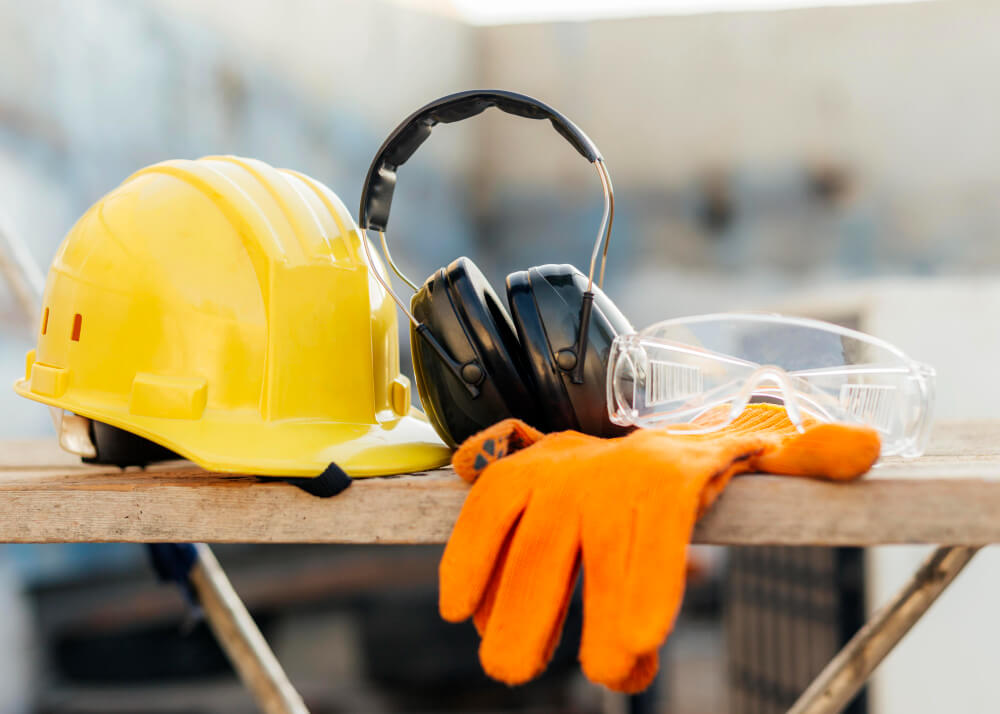
- PPE is your last line, not your first.
- Hi-vis only works when worn.
- Safety glasses fit better than an eye patch.
- Hearing protection now or hearing aids later.
- If the job needs gloves, wear gloves.
- Hard hat: better a headache than a hospital.
- Check your gear before it checks for you.
- Dress for the hazard, not the weather.
Housekeeping
- A tidy site is a safe site.
- Clean as you go.
- If it can fall, secure it.
- Blocked exits are not exits.
- Every cord on the floor is a trip.
- Put it back where the next person looks.
- Spills do not clean themselves.
Speaking up
- If you see something, say something.
- Report the near miss.
- Stop work if you are not sure.
- No question about safety is a dumb one.
- Silence is not safety.
- Tell us before it becomes a story.
- You are never too new to call a stop.
- Speak up early, not at the review.
Where a line has no documented author, present it as a general safety saying. Do not attribute a quote to a named person without a source.
Kit the message needs behind it: Carewell Group
A prompt only works when the control it points at is in place. Carewell Group supplies Australian worksites with the safety gear behind these messages:
- Safety Vests to AS/NZS 4602.1, day, day/night and custom-printed, and custom vest supply and branding for teams and events.
- Gloves: cut-resistant, general-purpose and chemical-handling options for the manual handling and hazardous substance messages.
- Wheel Chocks for the “chock it before you leave it” rule at docks and yards.
- Tire Depth Gauges for pre-start vehicle checks on forklifts and fleet.
- Electronic Locks for controlling access to plant rooms, chemical stores and isolation points.
- The full Industrial and Safety range, plus floor and hazard marking tape for walkways and exclusion zones.
Carewell Group is an Australian supplier operating from NSW, with warehousing in Smithfield, Matraville and Padstow, working with clients across grocery and retail, e-commerce, food and beverage, and industrial and manufacturing. Certified to ISO 9001:2015, ISO 14001:2015 and ISO 45001:2018, and an APCO member.
Setting up signage and need the gear to back it? Request a quote or call +61 (02) 8760 1491.
Frequently asked questions
How long should a safety quote on a sign be?
Four to six words for most reminders. If it does not fit on one line, read at arm’s length, shorten it.
Do safety signs have to follow a standard in Australia?
Workplace safety signs should follow AS 1319 for shape, colour and placement. Mandatory and prohibition signage in particular is expected to match the convention so it is recognised instantly.
How many safety signs is too many?
If a person cannot take in every sign in a given area at a glance, there are too many. Remove the low-value ones so the important ones are seen.
Should safety quotes change or stay the same?
Statutory signs (PPE, prohibition, emergency) stay put. Motivational and reminder messages should rotate on a schedule, or people stop noticing them.
Where do digital screens fit?
Crib rooms and pre-start areas. They are the easiest place to rotate a weekly message and the cheapest to update when a new hazard appears.
Sources
- Safe Work Australia, work-related fatalities and workers’ compensation statistics: safeworkaustralia.gov.au
- Safe Work Australia, hierarchy of controls and administrative controls
- AS 1319, Safety signs for the occupational environment: Standards Australia
- SafeWork NSW, signage and consultation guidance: safework.nsw.gov.au
Written by Alif Vasaya, digital and content strategy, Carewell Group. Carewell Group is an Australian packaging, food packaging, tape, industrial safety and 3PL supplier. Last updated 9 September 2026.